HVAC New Installation Raleigh, NC
Ductless Mini-Split Installation Cost in Raleigh
Work out what a single-zone ductless mini-split install costs in Raleigh from BLS HVAC wages, a burden multiplier and an allowance.
Installation labor for one single-zone ductless mini-split in Raleigh works out to roughly $548 to $2,262 once the local HVAC wage is multiplied by a 2 to 3 times burden factor. Adding an assumed $1,800 to $4,800 for the unit and materials gives about $2,348 to $7,062. The labor range comes from BLS wages. The equipment allowance is an assumption, not a measured price.
Key points
- The BLS median wage for HVAC mechanics and installers in Raleigh, NC is $28.32 per hour, which is $1.01 (3.4%) below the national median of $29.33.
- A 2 to 3 times burden multiplier turns that wage into a billed rate of about $56.64 to $84.96 per worker-hour at the median.
- For a one-zone job, 12 to 24 combined crew-hours produce a labor and overhead range of about $548 to $2,262 before equipment.
- Under the assumed allowances in this article, equipment and materials make up roughly 68% to 77% of the total, so the unit line matters more than the labor line.
- This page uses no contractor quotes. It shows arithmetic you can check, then tells you how to compare it with a real bid.

What does a ductless mini-split installation cost in Raleigh?
A single-zone installation in Raleigh costs about $2,348 to $7,062 under the assumptions below, with $548 to $2,262 of that being labor and overhead derived from federal wage data. The rest is an allowance for the indoor head, outdoor unit, line set, wiring and mounting materials that this page cannot price from official data.
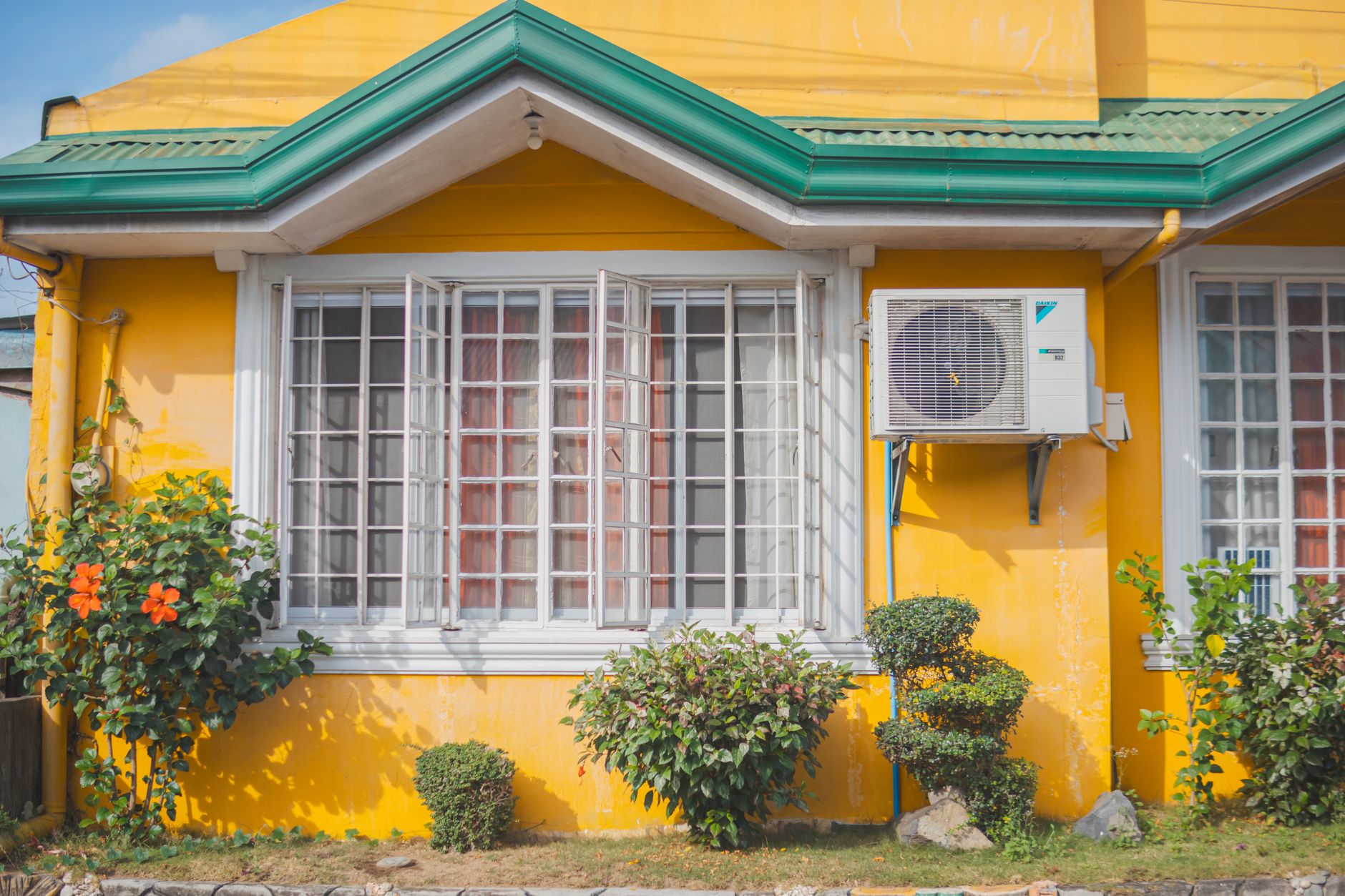
Here is the scope this page prices. It is one outdoor unit, one wall-mounted indoor head, a short refrigerant line set through an exterior wall, a condensate drain, a pad or wall bracket for the outdoor unit, and system start-up. It does not include a new electrical circuit, a multi-zone system, a ceiling cassette, or any structural work. Those are covered in the exclusions section.
Three kinds of numbers appear in this article, and they are kept apart on purpose.
- Official observations: the hourly wages and index levels from the Bureau of Labor Statistics (BLS). These are cited and linked.
- Assumptions: crew-hours, the burden multiplier and the equipment and materials allowance. These are the inputs you should argue with.
- Derived arithmetic: the cost ranges, which are only wages times assumptions. They are illustrative calculations, not measured first-party research, and nobody inspected a home or collected quotes to produce them.
What do Raleigh HVAC installers earn per hour?
The BLS Occupational Employment and Wage Statistics (OEWS) survey puts the median wage for heating, air conditioning, and refrigeration mechanics and installers (SOC 49-9021) in the Raleigh metro at $28.32 per hour. The figures below are from survey year 2025, series ID OEUM003958000000049902108, pulled from the BLS public API on 2026-11-10, and they are hourly wages paid to workers, not prices billed to customers. You can see the source on the BLS OEWS series page.

| Area | 25th percentile | Median | 75th percentile | Mean | Employed |
|---|---|---|---|---|---|
| Raleigh, NC | $22.83 | $28.32 | $31.42 | $28.12 | 2,550 |
| NC statewide | $22.52 | $27.53 | $30.92 | $27.60 | 15,230 |
| United States | $23.25 | $29.33 | $37.05 | $31.14 | 409,670 |
The same source reports that first-line supervisors of construction trades and extraction workers in Raleigh earn a median $37.35 per hour. That matters if a contractor sends a lead technician rather than two journey-level installers, and it is tested in the sensitivity section below.
The BLS Occupational Outlook Handbook profile describes the duties, entry requirements and national pay for this occupation. It does not break out ductless systems separately, and neither does the wage table. The wage is for the whole occupation, which also covers furnace, boiler and refrigeration work.
How does Raleigh compare with the national wage?
Raleigh pays HVAC installers less than the national figure at every point in the distribution, and the gap grows toward the top of the range. The table shows the difference in dollars and percent against the national figure supplied by BLS.
| Measure | Raleigh | United States | Raleigh minus U.S. | Gap as % of U.S. |
|---|---|---|---|---|
| 25th percentile | $22.83 | $23.25 | -$0.42 | -1.8% |
| Median | $28.32 | $29.33 | -$1.01 | -3.4% |
| Mean | $28.12 | $31.14 | -$3.02 | -9.7% |
| 75th percentile | $31.42 | $37.05 | -$5.63 | -15.2% |
Against North Carolina as a whole, Raleigh’s median is $0.79 higher ($28.32 versus $27.53), which is 2.9%. So Raleigh is a little above its state and a little below the country at the median.
What does a $1.01 gap mean for a homeowner? In the middle case below, 16 crew-hours at a 2.5 times burden, the median gap is $1.01 × 16 × 2.5 = $40.40. That is the amount by which the labor line is lower in Raleigh than it would be at the national median. It is small compared with the spread caused by hours and burden, which is why the sections below spend more time on those.
The wider gap at the 75th percentile (15.2%) suggests that the national figure is pulled up by high-wage metros. A Raleigh contractor who pays well above the local median is still within the local distribution. Do not read a high local wage as evidence of overcharging by itself.
Why is a wage not the price you pay?
A wage is what the worker is paid, and a bill is that wage multiplied by a burden and overhead factor. The factor covers payroll taxes, workers’ compensation, liability insurance, vehicles, fuel, tools, office time, warranty reserve and profit. None of these costs appears on the installer’s pay stub, and all of them appear in your price.
This article applies a multiplier of 2 to 3 times the wage. That is a working assumption for small residential contractors, not a measured figure, and BLS does not publish it. Low-end contractors with few vehicles and little office staff might sit near 2. A firm with a warranty reserve, a dispatch office and a showroom might sit near 3 or above. If you are quoted a number built on a multiplier outside that range, that is a question to ask rather than proof of a problem.
At the Raleigh median wage of $28.32:
- 2.0 times gives $56.64 per worker-hour
- 2.5 times gives $70.80 per worker-hour
- 3.0 times gives $84.96 per worker-hour
Those are billed rates for one person’s hour, not the hourly price quoted for a whole truck. A two-person crew bills two worker-hours for every clock hour on site.
How is the labor cost built up?
The labor and overhead portion is crew-hours times wage times burden, and each step is a separate line in the table. All three scenarios are for a single-zone, wall-mounted system in a house with reasonable access.
The inputs, all assumptions except the wages:
- Low case: 2 installers for 6 hours each, 12 crew-hours, paid at the Raleigh 25th percentile of $22.83, burden 2.0 times.
- Mid case: 2 installers for 8 hours each, 16 crew-hours, paid at the Raleigh median of $28.32, burden 2.5 times.
- High case: 2 installers for 12 hours each, 24 crew-hours, paid at the Raleigh 75th percentile of $31.42, burden 3.0 times.
| Step | Low | Mid | High |
|---|---|---|---|
| Crew (assumed) | 2 installers | 2 installers | 2 installers |
| Hours each (assumed) | 6 | 8 | 12 |
| Crew-hours | 12 | 16 | 24 |
| Hourly wage (BLS Raleigh) | $22.83 | $28.32 | $31.42 |
| Wages paid (hours × wage) | $273.96 | $453.12 | $754.08 |
| Burden multiplier (assumed) | 2.0 | 2.5 | 3.0 |
| Labor and overhead billed | $547.92 | $1,132.80 | $2,262.24 |
| Equipment and materials allowance (assumed) | $1,800 | $3,000 | $4,800 |
| Total, labor plus allowance | $2,347.92 | $4,132.80 | $7,062.24 |
The labor line is the only one derived from federal data. The allowance row is a placeholder. It is a round number chosen so the table adds up, and it is not a price from BLS or any other source. Swap in the real equipment line from your quote and the total changes accordingly.
Compounding the three extremes (lowest wage, fewest hours, lowest burden) is deliberate. The low and high columns are bounds, not typical outcomes. Most real jobs will land closer to the mid column, but this page cannot tell you where yours falls.
What do equipment and materials add?
Equipment and materials are the largest line under these assumptions, and federal data can only say which way their prices are moving, not what they cost. The allowance of $1,800 to $4,800 is 76.7% of the low-case total, 72.6% of the mid case, and 68.0% of the high case.
BLS publishes producer price indexes, which are index levels with a 1982 base of 100. They are index points, not dollars, and BLS says an index level should never be converted into a dollar price. Two series are relevant to a mini-split, and both are shown on the BLS PPI series page.
| Series | September 2026 | A year earlier | 12-month change |
|---|---|---|---|
| Pumps, compressors, and equipment (WPU1141) | 414.041 | 399.554 | +3.6% |
| Sheet metal products (WPU1073) | 361.123 | 338.491 | +6.7% |
Compressors are the core of the outdoor unit, and sheet metal covers housings and some line-set accessories. Both indexes are up over twelve months, which points to upward pressure on equipment-related costs. Neither index is specific to ductless systems, brands or sizes, and neither tells you a unit price. Treat them as a reason to avoid assuming last year’s equipment price still applies, not as an input to the arithmetic.
How sensitive is the total to hours, burden and crew?
Hours and burden move the labor line far more than the Raleigh-versus-national wage gap does. The table holds the median wage of $28.32 and varies one input at a time. Each cell is crew-hours × $28.32 × burden.
| Crew-hours | Burden 2.0 | Burden 2.5 | Burden 3.0 |
|---|---|---|---|
| 12 | $679.68 | $849.60 | $1,019.52 |
| 16 | $906.24 | $1,132.80 | $1,359.36 |
| 24 | $1,359.36 | $1,699.20 | $2,039.04 |
Going from 12 to 24 crew-hours at 2.5 times adds $849.60. Going from 2.0 to 3.0 times at 16 crew-hours adds $453.12. The $40.40 Raleigh-versus-national median gap is dwarfed by both.
Crew mix matters too. Suppose one of the two workers is a lead earning the supervisor median of $37.35 per hour, and the other is paid the installer median of $28.32. For 8 hours each at 2.5 times:
- Lead: 8 × $37.35 = $298.80
- Installer: 8 × $28.32 = $226.56
- Wages paid: $525.36
- Billed: $525.36 × 2.5 = $1,313.40
That is $180.60 more than the $1,132.80 mid case. A supervisor’s rate is for supervisory work, so a contractor who sends a lead on every install is not padding the bid, but a lead’s rate on a labor line should be visible to you.
What can this calculation not see?
This calculation covers wages, a burden factor and an allowance, and it leaves out everything that varies from house to house. Any of the following can move a real quote above the ranges shown here.
- Permits and inspections: Local permit fees and inspection scheduling are not in the wage data. Ask whether the permit is included and who pulls it.
- Electrical work: A dedicated circuit, disconnect or panel upgrade is usually electrician work, with its own wage category. It is excluded here.
- Disposal and removal: Removing an old window unit, space heater or abandoned equipment, and disposing of refrigerant-handling waste, adds time that is not in the 12 to 24 hours.
- Code upgrades: Condensate, surge protection or clearance requirements found during the job can add work.
- Access and difficulty: A second-story outdoor unit, a long line-set run, brick exterior, a crawl space, steep roof pitch for a roof-mounted bracket, or a finished wall that needs patching all add hours.
- Season: Spring and summer demand can push the burden factor toward the top of the range or lengthen scheduling. This page has no seasonal data.
- Emergency or after-hours call-outs: Premium rates for urgent work are not modeled. A same-day install in a heat wave is a different price from a scheduled one.
- Multi-zone systems: Each added indoor head adds line-set runs, wall penetrations and commissioning time. Do not multiply a one-zone figure by the zone count and treat it as a quote.
- Equipment choice: Capacity, efficiency rating and brand all change the unit line, and none of them is captured by an index.
If your house has two or more of these, the high column is a better starting point than the mid column, and even the high column may be short.
How do you read a real quote against these numbers?
Compare the quote’s labor line to the billed-rate range, and the equipment line to the model and price printed on the proposal. A quote that bundles everything into one number cannot be compared, so ask for it to be split.
A useful quote itemizes at least these lines:
- Equipment: outdoor unit and indoor head model numbers, capacity and price.
- Line set, wiring and mounting materials.
- Labor: crew size and hours, or a stated flat labor price.
- Electrical work, if any, and whether a licensed electrician is doing it.
- Permit and inspection fees.
- Removal and disposal.
- Warranty terms, split between equipment and workmanship.
To test the labor line, divide it by the crew-hours. Using Raleigh BLS wages and the assumed 2 to 3 times burden, a worker-hour billed at:
- $45.66 to $56.64 is at the low to median end ($22.83 × 2 and $28.32 × 2)
- $70.80 is the median wage at 2.5 times
- $84.96 to $94.26 is at the high end ($28.32 × 3 and $31.42 × 3)
If a labor line implies well over $94.26 per worker-hour, one of three things is true: the job takes more hours than assumed, the crew includes higher-paid staff, or the burden is above 3 times. Each is possible. The point is that the contractor should be able to say which.
Which single question exposes a padded bid?
Ask: “How many labor hours and how many workers are in this price?” A contractor who has estimated the job can answer in one sentence. A contractor who has marked up a round number often cannot, or answers with a vague “it depends.”
The answer lets you do the division yourself. If the answer is 16 crew-hours and the labor line is $1,132.80, the implied rate is $70.80 per worker-hour, which sits at the median wage at 2.5 times. If the labor line is $2,400 for the same 16 hours, the implied rate is $150 per worker-hour, which is more than five times the Raleigh median wage of $28.32 and well past the 3 times assumption. That does not prove padding, but it is the point where you should ask what the extra covers.
Be careful in the other direction too. A bid far below the low end ($548 for a full install) may leave out equipment, skip the permit, or rely on workers who are not licensed or insured. A price below the burden floor of 2 times means someone is absorbing costs, and it may be you later.
What should you check before signing?
Check that the quote names the equipment and splits it from labor, then confirm the items this calculation cannot see. Use this list before you sign.
- The equipment model numbers and capacity appear on the proposal, with a separate price.
- The labor line states crew size and hours, or a flat price you can divide by the assumed hours.
- The permit is named, and the proposal says who pulls it and who pays the fee.
- Electrical work is either included with a named licensed electrician or clearly excluded with a stated price to add it.
- Removal, disposal and wall or ceiling patching are included or excluded in writing.
- Warranty terms are written down for both the equipment and the installation workmanship.
- The contractor’s license and insurance can be verified with the appropriate state licensing board. This page cannot verify either.
- The payment schedule does not ask for the full amount before work starts.
- You have at least one other written quote with the same scope, so the comparison is like for like.
This page does not survey contractors, inspect properties or collect quotes. It takes federal wage data, applies stated assumptions, and shows the arithmetic so you can change any input. When your own quote lands outside the ranges here, the useful response is a question about hours, burden or scope, not an assumption that either the quote or this page is wrong.
Read next
Common questions
- How much does it cost to install one ductless mini-split in Raleigh?
- Using BLS wages, a two-person crew working 12 to 24 combined hours, and a 2 to 3 times burden multiplier, the labor and overhead share comes to about $548 to $2,262. Adding an assumed $1,800 to $4,800 for the unit and materials gives roughly $2,348 to $7,062. The labor range is derived from federal wages. The equipment allowance is an assumption, not a measured price, so replace it with the equipment line from your own quote.
- Is the Raleigh HVAC wage higher or lower than the national wage?
- Lower at every point except against the state. The BLS median for HVAC mechanics and installers is $28.32 per hour in Raleigh against $29.33 nationally, a gap of $1.01 or 3.4%. At the 75th percentile the gap widens to $5.63, or 15.2%. Raleigh's median is $0.79, or 2.9%, above the North Carolina statewide median of $27.53. Wages are what workers are paid, not what a homeowner is billed.
- Why is the quote so much higher than the installer's hourly wage?
- The wage is only what the worker takes home before the employer's costs. A contractor's billed rate also has to cover payroll taxes, workers' compensation, liability insurance, vehicles, fuel, tools, office time, warranty reserve and profit. A working assumption for small residential contractors is 2 to 3 times the wage. At the Raleigh median of $28.32, that implies about $56.64 to $84.96 billed per worker-hour.
- Can I use the producer price index to estimate the equipment price?
- No. The BLS producer price index is measured in index points, not dollars, and it tracks broad categories rather than a specific mini-split model. It only shows direction. Pumps, compressors, and equipment rose 3.6% over twelve months to September 2026, and sheet metal products rose 6.7%. Use those figures to expect upward pressure on equipment and ductwork-related metal, and get the real unit price from a written quote.
- What single question best tests whether a bid is padded?
- Ask how many labor hours and how many workers are in the price. A labor line can be checked against the Raleigh wage table. For a one-zone job, 12 to 24 combined crew-hours at $45.66 to $94.26 per worker-hour gives about $548 to $2,262. A bid far above that range is not automatically wrong, but the contractor should be able to name the extra hours, permit work or difficult access that explains it.
Sources — checked Nov 10, 2026
- BLS OEWS — Heating, Air Conditioning, and Refrigeration Mechanics and Installers, Raleigh, NC
- BLS Occupational Outlook Handbook — Heating, Air Conditioning, and Refrigeration Mechanics and Installers
- BLS Producer Price Index — Pumps, compressors, and equipment, Sheet metal products
Wage and price index figures are taken from the sources above on the date shown. Wage data is released annually and price indexes monthly, so both move. Everything here is a calculated estimate, not a quote — get a written bid from a licensed local contractor before committing to work. See how the numbers are built.