Plumbing New Installation Raleigh, NC
What Whole-House Water Filtration Costs to Install in Raleigh
Work out a Raleigh whole-house water filter install from BLS plumber wages: about $830 to $4,210, with hours, burden and equipment shown.
A standard whole-house water filter installed on an accessible main line in Raleigh works out to roughly $830 to $4,210, with about $2,010 as the middle case. That range is derived here from federal plumber wages, stated crew-hours, an assumed overhead multiplier and an assumed equipment allowance. It is a yardstick for testing quotes, not a price list or a survey of Raleigh contractors.
Key points
- Raleigh plumbers earn a median of $29.10 per hour, which is $1.57 (5.1%) below the national median of $30.67, according to BLS OEWS data.
- The three scenarios below total about $833, $2,009 and $4,212, and labor is only 25% to 29% of each, so the equipment you choose moves the price more than the wage does.
- The wage gap between Raleigh and the national median changes a typical 7-hour job by about $27, roughly 1.3% of the total.
- The hours, the 2.0 to 3.0 overhead multiplier and the equipment allowance are assumptions you can argue with, not measured figures.
- The single most revealing quote question is for labor hours and equipment price as separate lines, so you can divide one by the other.
What exactly is being priced here?
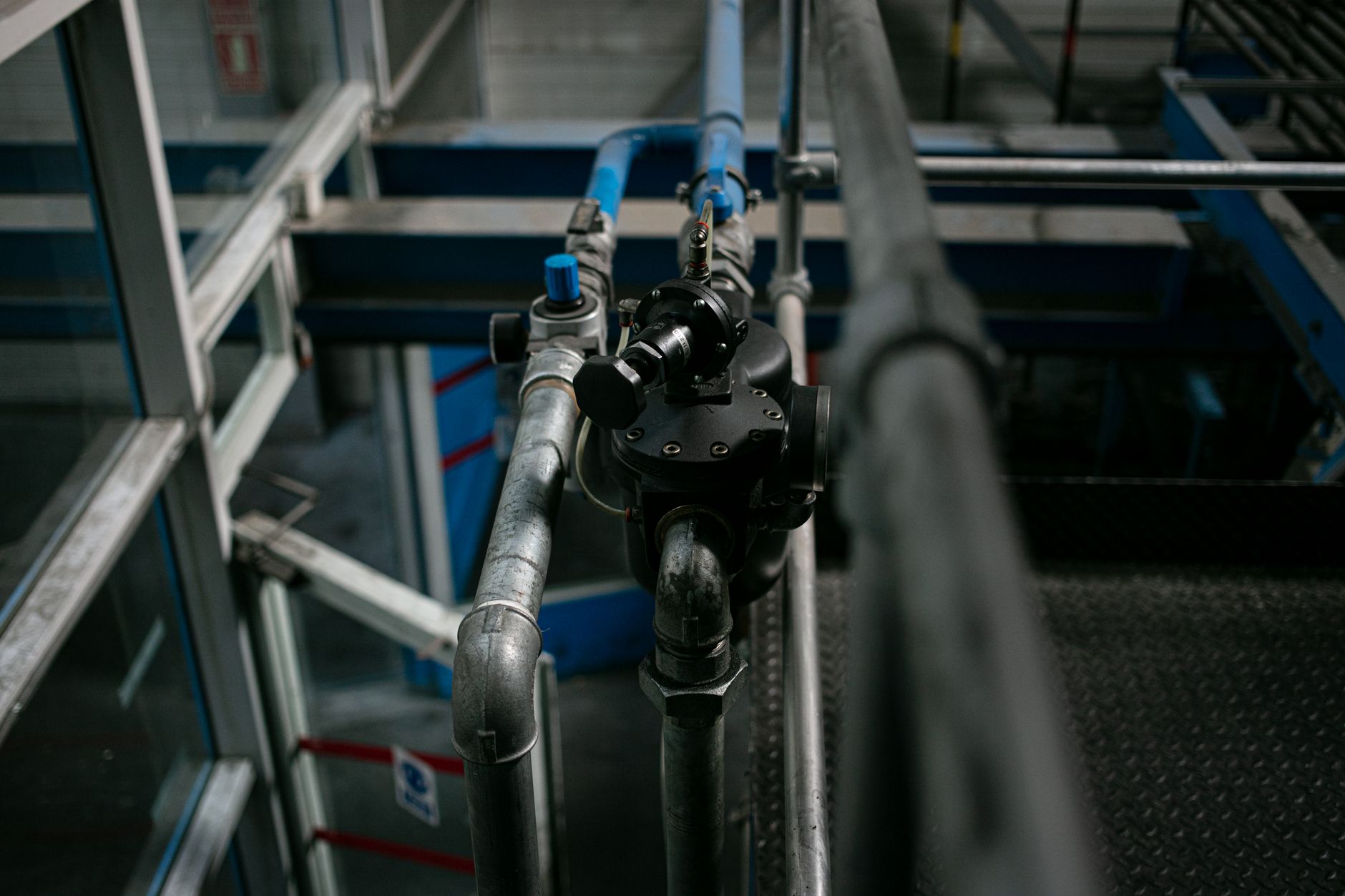
The job priced here is a point-of-entry system: a sediment pre-filter and a carbon tank installed on the main water line, with a bypass valve, two shutoff valves, fittings, a mounting board and a pressure test. It assumes the main shutoff works, the install location is a garage, basement or utility room, and nothing else on the line needs repair.
It does not include a water softener, reverse osmosis drinking tap, ultraviolet unit, or a pressure tank for a private well. Those are different jobs with different parts and hours. If your quote bundles them, compare the bundle against separate pieces, not against this page.
The title says “install” and this page treats the installed system as two parts: the plumber’s labor, which BLS wage data can anchor, and the equipment, which it cannot. Be clear about that split from the start, because the equipment half is an allowance I am stating, not a number I observed.
What do Raleigh plumbers earn compared with the national figure?
Raleigh plumbers earn less than the national figure at every percentile BLS reports. The table shows the 2025 survey of Plumbers, Pipefitters, and Steamfitters (SOC 47-2152) from the BLS OEWS series for Raleigh, NC. These are hourly wages paid to workers, not prices billed to customers.
| Measure | United States | NC statewide | Raleigh, NC | Raleigh vs US ($/hr) | Raleigh vs US (%) |
|---|---|---|---|---|---|
| 25th percentile | $24.13 | $22.38 | $23.26 | -$0.87 | -3.6% |
| Median | $30.67 | $27.44 | $29.10 | -$1.57 | -5.1% |
| Mean | $34.70 | $27.27 | $28.99 | -$5.71 | -16.5% |
| 75th percentile | $40.92 | $30.43 | $33.66 | -$7.26 | -17.7% |
| Employed | 465,840 | 14,510 | 2,810 |
Two readings matter. First, the Raleigh median sits $1.57 below the national median, a 5.1% gap. Second, the gap grows toward the top of the pay scale: the Raleigh 75th percentile is $7.26 below the national one. Local wages are bunched more tightly than national wages, so a highly paid Raleigh plumber earns far less than a highly paid plumber in the best-paying US markets.
The same BLS data lists a median of $37.35 per hour for first-line supervisors of construction trades in Raleigh. A firm that sends a supervisor to oversee your install is paying that rate for those hours, which is one reason a larger company may bill more for the same equipment.
For what plumbers do, how they are trained and how they are licensed, the BLS Occupational Outlook Handbook profile is the federal reference.
Why is a plumber’s wage not the price I pay?
The wage is what the plumber takes home before their own taxes. The bill has to cover everything else a contractor carries: payroll taxes, workers’ compensation, liability insurance, the truck and its fuel, tools, office time, a warranty reserve for callbacks and profit.
This page applies a burden and overhead multiplier to the wage. The working assumption for small residential contractors is 2.0 to 3.0 times the wage. That is an assumption, not a measured figure, and it is the weakest number in the build-up, because a one-person licensed shop and a 30-truck company carry very different overhead.
Here is what the multiplier does to the Raleigh median wage of $29.10:
- At 2.0 times, the effective billing rate is $58.20 per hour.
- At 2.5 times, it is $72.75 per hour.
- At 3.0 times, it is $87.30 per hour.
If a plumber quotes an hourly rate inside that band, the quote is consistent with Raleigh wages and typical overhead. If it is well outside, there may be a reason (emergency hours, a specialist, a large firm), but you are entitled to ask.
How is the install price built up?
The build-up multiplies crew size by hours, by wage, by the burden multiplier, then adds the equipment allowance. Each scenario below changes every input at once, so the low and high cases are deliberately wide, not the likeliest outcomes.
Assumptions (all of them are mine, not BLS data):
- Simple install: 1 plumber, 5 hours, 25th percentile wage ($23.26), burden 2.0, equipment allowance $600.
- Typical install: 1 plumber, 7 hours, median wage ($29.10), burden 2.5, equipment allowance $1,500.
- Difficult install: 2 plumbers, 6 hours each (12 labor-hours), 75th percentile wage ($33.66), burden 3.0, equipment allowance $3,000.
| Line | Simple | Typical | Difficult |
|---|---|---|---|
| Crew × hours = labor-hours | 1 × 5 = 5 | 1 × 7 = 7 | 2 × 6 = 12 |
| Raleigh wage per hour (BLS) | $23.26 | $29.10 | $33.66 |
| Wage cost (hours × wage) | $116.30 | $203.70 | $403.92 |
| Burden multiplier (assumed) | 2.0 | 2.5 | 3.0 |
| Labor as billed | $232.60 | $509.25 | $1,211.76 |
| Equipment and fittings (assumed) | $600.00 | $1,500.00 | $3,000.00 |
| Estimated total | $832.60 | $2,009.25 | $4,211.76 |
| Labor share of total | 28% | 25% | 29% |
The range, rounded, is $830 to $4,210. The middle case is about $2,010.
Check the arithmetic yourself with the typical case: 7 hours × $29.10 = $203.70; × 2.5 = $509.25; plus $1,500 = $2,009.25.
The equipment allowances are not from BLS. Water treatment equipment varies from a basic cartridge housing to a large backwashing carbon system with a control head, and the federal data supplied here has no price for any of it. If you have a specific model priced, replace my allowance with your number and keep the labor lines.
Which input moves the total most?
The equipment allowance moves the total most, followed by the hours, with the wage a distant third. The table changes one input at a time from the typical case ($2,009.25).
| Change from the typical case | Effect on labor as billed | New total | Change |
|---|---|---|---|
| Burden 2.0 instead of 2.5 | $407.40 | $1,907.40 | -$101.85 |
| Burden 3.0 instead of 2.5 | $611.10 | $2,111.10 | +$101.85 |
| One more plumber-hour (8 instead of 7) | $582.00 | $2,082.00 | +$72.75 |
| 25th percentile wage ($23.26) instead of median | $407.05 | $1,907.05 | -$102.20 |
| 75th percentile wage ($33.66) instead of median | $589.05 | $2,089.05 | +$79.80 |
| Equipment $1,000 higher | $509.25 | $3,009.25 | +$1,000.00 |
Every extra hour adds about $72.75 at the median wage and a 2.5 multiplier. A burden swing from 2.0 to 3.0 shifts the total by about $204. A $1,000 swing in equipment moves it by $1,000. If you want to save money, the first question is which system you actually need, not who has the lowest hourly rate.
Does Raleigh’s lower wage make filtration cheaper than the national average?
Slightly, but not by much. Using the same typical case with the national median wage of $30.67 instead of Raleigh’s $29.10:
- National wage cost: 7 × $30.67 = $214.69.
- Labor as billed at 2.5 times: $536.73.
- Total with $1,500 equipment: $2,036.73.
- Raleigh total: $2,009.25.
- Difference: $27.48, or 1.3% of the total.
The labor gap is real (5.1%), but labor is only about a quarter of the job, and equipment is assumed to cost the same everywhere. A Raleigh homeowner should not expect a large local discount from wage levels alone. A bid that is hundreds of dollars below this page is probably using cheaper equipment or fewer hours. A bid hundreds above it is probably carrying a bigger system or a bigger overhead load.
What are metals and plastics doing to material costs?
Metal prices are rising much faster than plastic prices, which matters for fittings. The BLS Producer Price Index, series WPU1022 and WPU0721, reports index levels (1982 = 100), not dollars:
| PPI series | September 2026 | A year earlier | Twelve-month change |
|---|---|---|---|
| Primary nonferrous metals (WPU1022) | 566.010 | 387.328 | +46.1% |
| Plastic construction products (WPU0721) | 355.051 | 339.420 | +4.6% |
These are index points. They cannot be converted into a price for a valve, a tank or a length of pipe, and I have not tried to. What they show is direction: the broad metals category is up 46.1% in a year, while plastic construction products are up 4.6%.
What that means for your quote is limited and uncertain. A filtration install uses metal fittings and plastic or composite parts, but the PPI is a wholesale index for broad product groups, not a price for the specific items in your system. If a contractor says materials have gone up, the metals index supports that as a general direction. It does not tell you how much of the rise reached a specific fitting, and it does not justify any particular dollar markup. Ask for the parts list.
What can this calculation not see?
This calculation sees wages, hours, overhead and one equipment number. It cannot see the following, and any of them can move a real quote:
- Permits and inspection. Some jurisdictions require a plumbing permit for work on the main supply line. Fees and requirements vary, and I have no permit data. Ask the contractor whether a permit is required and who pulls it.
- Disposal. Removing an old tank, softener or cut-out pipe sections may carry a charge.
- Code upgrades. If the existing main shutoff does not close fully, a pressure regulator is missing, or old galvanized pipe crumbles when cut, the job grows. These are the most common reasons a final bill exceeds the first quote.
- Access and difficulty. A crawl space, a tight utility closet or a long run from the main to the install location adds hours. The 12 labor-hour case is meant to represent this, but real difficulty can exceed it.
- Electrical needs. Backwashing or UV systems may need an outlet or drain connection. An electrician’s time is a different wage series and is not in these figures.
- Season and demand. Busy periods can lengthen lead times and raise prices. I have no seasonal data and have not adjusted for it.
- Emergency call-out premiums. If the install happens because of a failure or a rushed deadline, after-hours rates can exceed the 3.0 multiplier assumed here.
- Ongoing costs. Cartridges, media replacement and annual service are not part of an install price.
The sources listed above cover wages and indexes. They say nothing about any of these items, so treat any of them as upside risk to the ranges above.
How do I read a real quote against these numbers?
Start by asking the bidder to itemize. A quote you can test has at least these lines:
- Equipment, by make, model and price.
- Fittings and materials, separately from the equipment.
- Labor, shown as hours and an hourly rate, or as hours and a total.
- Permit and inspection fees, if any.
- Disposal or haul-away, if any.
- Contingency, if the bidder adds one, with the conditions that trigger it.
Then do the check in this order:
- Divide the labor charge by the stated hours. Compare the result with the $58 to $87 per hour band from the overhead section. A figure inside the band is consistent with Raleigh wages and ordinary overhead.
- Compare the stated hours with 5, 7 and 12. Fewer than 5 for a clean main-line install is possible, but ask what is excluded. More than 12 deserves an explanation of the access or repair work involved.
- Look up the equipment price independently. If the equipment line is far above what the same model sells for, that is where a padded bid hides.
The single question that exposes a padded bid: “What are the total labor hours, and what is the equipment price, as two separate lines?” A bidder who sells a bundled “system installed” figure and will not break it out may be marking up the equipment, stretching the hours, or both. The bundle may still be fair, but you cannot tell, and you cannot compare it with a second bid.
What should I check before signing?
Before you sign, confirm the following:
- The contract names the exact equipment, with model and capacity, not just “whole-house filter.”
- Labor hours and rate, or a fixed labor price, are stated.
- The contractor holds a plumbing license valid in North Carolina and carries liability insurance and workers’ compensation. Ask for proof and check the license with the state licensing board directly. Licensing is covered in general terms in the BLS occupation profile.
- Permit responsibility is written down: who applies, who pays, who schedules the inspection.
- The quote says what happens if the work uncovers corroded pipe, a failed shutoff or a missing regulator, and who approves the extra cost before it is incurred.
- Warranty terms for both labor and equipment are in writing, with the duration stated.
- Maintenance costs (cartridges, media, service) are listed so the install price is not the only number you compare.
- You have at least two itemized quotes. Without a second one, even a perfectly itemized bid has nothing to be tested against.
How was this estimate built, and how far can it be trusted?
The wage figures come from the BLS OEWS 2025 survey and the index figures from BLS Producer Price Index data for September 2026, all pulled on 2026-10-27. The hours, the burden multiplier and the equipment allowances are my assumptions, labeled as such wherever they appear. The totals are arithmetic on those inputs, not observed prices, and not a survey of Raleigh contractors. No one has been called, no quote has been collected and no property has been inspected in producing these numbers.
The range is useful for one thing: telling you whether a quote’s labor line and equipment line are plausible, and which line to question if they are not. If you change the assumptions, the table in the build-up section shows how far the total will move.
Read next
Common questions
- How much does whole-house water filtration cost to install in Raleigh?
- Under the assumptions on this page, a standard sediment plus carbon tank on an accessible main line works out to about $830 at the low end, about $2,010 in the middle case and about $4,210 at the high end. Labor is roughly a quarter of each total. The rest is an equipment allowance, which is an assumption, not a BLS figure. Treat the result as a yardstick for comparing quotes, not a price list.
- How many hours does a plumber need to install a whole-house filter?
- This page assumes 5 plumber-hours for a simple install, 7 hours for a typical one and 12 labor-hours (two plumbers for 6 hours) for a difficult one. These are assumptions, not measured figures. The work covers cutting into the main line, fitting a bypass and shutoffs, mounting the tank, pressure testing and flushing. Ask any bidder to state their hours so you can compare them with these three cases.
- Do Raleigh plumbers charge less than the national average?
- Their wages are lower. BLS reports a Raleigh median of $29.10 per hour against $30.67 nationally, a gap of $1.57 or 5.1 percent. At the 75th percentile the gap widens to $7.26, or 17.7 percent. On a 7-hour job at a 2.5 multiplier, the median wage gap moves the bill by about $27, which is small next to equipment cost.
- Is the hourly wage the same as what a plumber bills me?
- No. The BLS wage is what the worker is paid. The customer bill also covers payroll taxes, workers' compensation, liability insurance, vehicles, tools, office time, warranty reserve and profit. This page assumes a multiplier of 2.0 to 3.0 times the wage, a common working assumption for small residential contractors. At 2.5 times, a $29.10 median wage becomes an effective billing rate of about $72.75 per hour.
- What single question exposes a padded filtration quote?
- Ask for the total labor hours and the equipment price as separate lines, then divide the labor charge by the hours. If the result is far above roughly $58 to $87 per hour, the quote is either carrying a larger overhead load than the 2.0 to 3.0 multiplier assumed here or hiding markup in the labor line. A bidder who cannot state hours and equipment separately is hard to compare.
Sources — checked Oct 27, 2026
- BLS OEWS — Plumbers, Pipefitters, and Steamfitters, Raleigh, NC
- BLS Occupational Outlook Handbook — Plumbers, Pipefitters, and Steamfitters
- BLS Producer Price Index — Primary nonferrous metals, Plastic construction products
Wage and price index figures are taken from the sources above on the date shown. Wage data is released annually and price indexes monthly, so both move. Everything here is a calculated estimate, not a quote — get a written bid from a licensed local contractor before committing to work. See how the numbers are built.